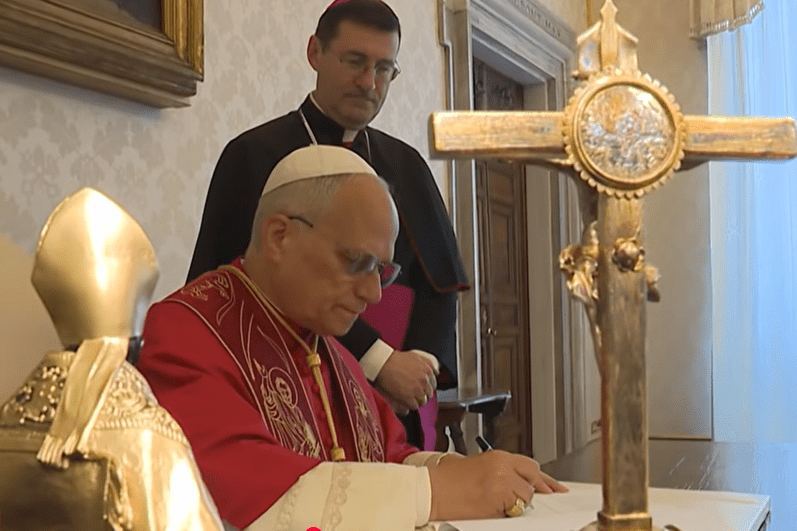
VATICAN CITY – 25 May 2026 – In a historic teaching document released on May 25, 2026, Pope Leo XIV has called for the global community to “disarm” artificial intelligence, warning that without immediate moral safeguards, the technology could lead to “new forms of slavery” and render traditional just war doctrines obsolete. In his first encyclical, titled Magnifica Humanitas (“Magnificent Humanity”), the Pope drew a direct line between the Industrial Revolution that prompted his namesake’s 1891 Rerum Novarum and the current AI revolution, arguing that the Church must provide the moral vocabulary to govern an era where algorithms risk replacing human judgment . Presenting the 43,000-word document personally at the Vatican—an unusual move for a pontiff—Leo issued a stark mea culpa for the Church’s historical complicity in slavery, linking the exploitation of “infidels” in the 15th century to the modern extraction of rare minerals and the exploitation of data laborers in the Global South. “It is impossible not to feel deep sorrow,” he wrote, asking for pardon on behalf of the Church while warning that “digital colonialism” now threatens to profile and control human behavior under the guise of progress .
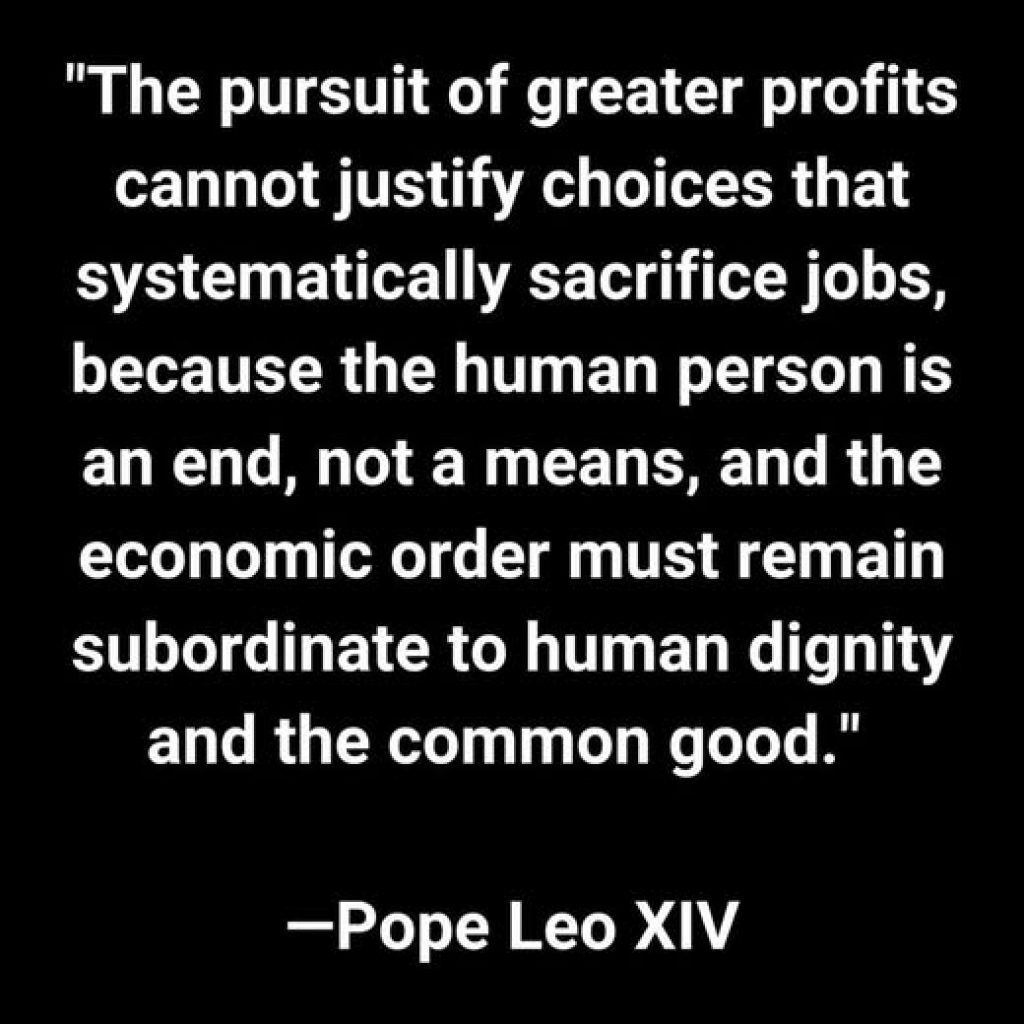
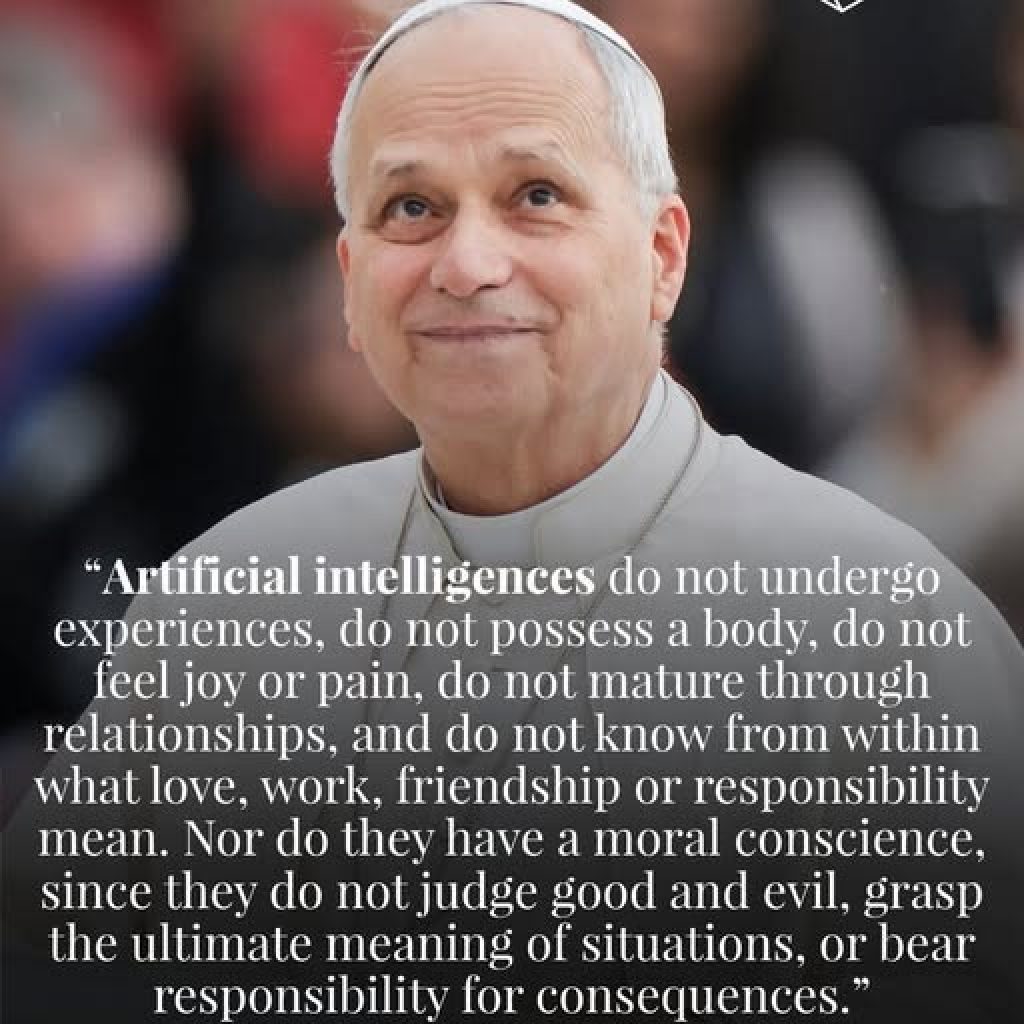
The encyclical unequivocally rejects the notion of machine personhood, insisting that while AI may simulate empathy, it lacks the conscience, body, and relational experience that define human dignity. However, the Pope went further than his predecessors by declaring that the Church’s traditional “just war” theory is “now outdated,” arguing that autonomous weapons systems lower the threshold for violence by reducing victims to mere data points . Addressing tech leaders directly, including Anthropic co-founder Christopher Olah who attended the presentation, Leo warned that the arms race is not merely military but economic and cognitive, driven by monopolies that concentrate power without accountability. He urged the development of new metrics beyond GDP to measure prosperity and demanded that workers, families, and local communities be given a voice in how algorithms govern hiring, healthcare, and education. “The word is strong, I know,” the Pope said of his call to disarm AI, “but deliberately chosen because this moment needs words capable of attracting attention, awakening consciences, and indicating paths forward for humanity” .
Finally, the Pope also borrowed an insight from Tolkien’s famous wizard, Gandalf: “It is not our part to master all the tides of the world, but to do what is in us for the succour of those years wherein we are set, uprooting the evil in the fields that we know, so that those who live after may have clean earth to till.”
To read the Encyclical Letter, please click below:
ENCYCLICAL LETTER
MAGNIFICA HUMANITAS
OF HIS HOLINESS
POPE LEO XIV
ON SAFEGUARDING THE HUMAN PERSON
IN THE TIME OF ARTIFICIAL INTELLIGENCE
The res novae of our time
Two biblical images
Building for the common good
Remaining human
CHAPTER ONE
A DYNAMIC APPROACH FAITHFUL TO THE GOSPEL
A Church journeying through human history
The wisdom of the word of God in dialogue with the human sciences
Social Doctrine as a shared discernment
The development of Social Doctrine from Leo XIII to the present
The first stages of the Church’s Social Doctrine
The years of the Second Vatican Council
The recent Magisterium
Interpreting history in the light of faith
CHAPTER TWO
FOUNDATIONS AND PRINCIPLES OF THE SOCIAL DOCTRINE OF THE CHURCH
The foundations of Social Doctrine
The human person: image of the Triune God
The equal dignity of all human beings
The supreme value of human rights
The principles of Social Doctrine
The principle of the common good
The principle of the universal destination of goods
The principle of subsidiarity
The principle of solidarity
The principle of social justice
Integral human development
An examen for the Church
TECHNOLOGY AND DOMINANCE.
THE GRANDEUR OF HUMANITY IN LIGHT OF THE PROMISES OF AI
The technocratic paradigm and digital power
Artificial intelligence
A valuable tool that requires vigilance
Responsibility, transparency and the governance of AI
What must not be lost
Underlying narratives: transhumanism and posthumanism
The limit, the heart, the grandeur of the human person
The authentic “more than human”: grace and Christian humanism
Two cities and two loves
CHAPTER FOUR
SAFEGUARDING HUMANITY AT A TIME OF TRANSFORMATION.
TRUTH, WORK, FREEDOM
Truth as a common good
Truth and democracy
Communication and the collective imagination
Toward an ecology of communication
An educational alliance for the digital age
The central role of schools
The dignity of work at a time of digital transition
The value of work
The problem of unemployment
An economy that values dignity
Families and young people: the social conditions for hope
Protecting freedom against dependencies and commercialization
Dependencies and societal control
Breaking the chains of new forms of slavery
A shared responsibility
THE CULTURE OF POWER AND THE CIVILIZATION OF LOVE
The civilization of love in the digital age
The culture of power
The normalization of war
Force without limits
Weapons and artificial intelligence
The crisis of multilateralism
A supposed political realism
Building the civilization of love
We can all do our part
The need to disarm words
Building peace through justice
Adopting the perspective of victims
Cultivating a healthy realism
Reviving dialogue
The necessity of diplomacy and multilateralism
Praying and hoping
CONCLUSION
The Word became flesh
One body in Christ
The construction site of our time
The song of hope: the Magnificat