This is a paraphrasing of an article written by Suresh Venkatasubramanian and published last year on the Bulletin of Atomic Scientists’ website, entitled How AI and surveillance capitalism are undermining democracy.
In March 2025, the U.S. State Department launched a program called “Catch and Revoke,” which uses AI to scan the social media accounts of tens of thousands of student visa holders for signs of terrorist sympathies following Hamas’s attack on Israel. This example highlights a broader problem: AI’s ability to predict and influence behavior fuels a cycle of surveillance that often leads to abuses of power.
The author notes that historically, humans have always tried to predict behavior—through oracles, astrology, phrenology, and now AI. But while AI and big data can be used positively, they also threaten democracy by blurring the line between public and private life. AI reduces individuals to group averages, stripping away uniqueness for the sake of prediction and control.
This dynamic is at the heart of “surveillance capitalism.” AI creates a vicious cycle: more data is needed to improve predictions, but that data is then sold and repurposed, often without consent. What was once private—like health data or home audio recordings—can become public and weaponized. For example, menstrual tracking data has been used in legal cases against abortion seekers, and Amazon Echo or Ring doorbell footage has been accessed by law enforcement.
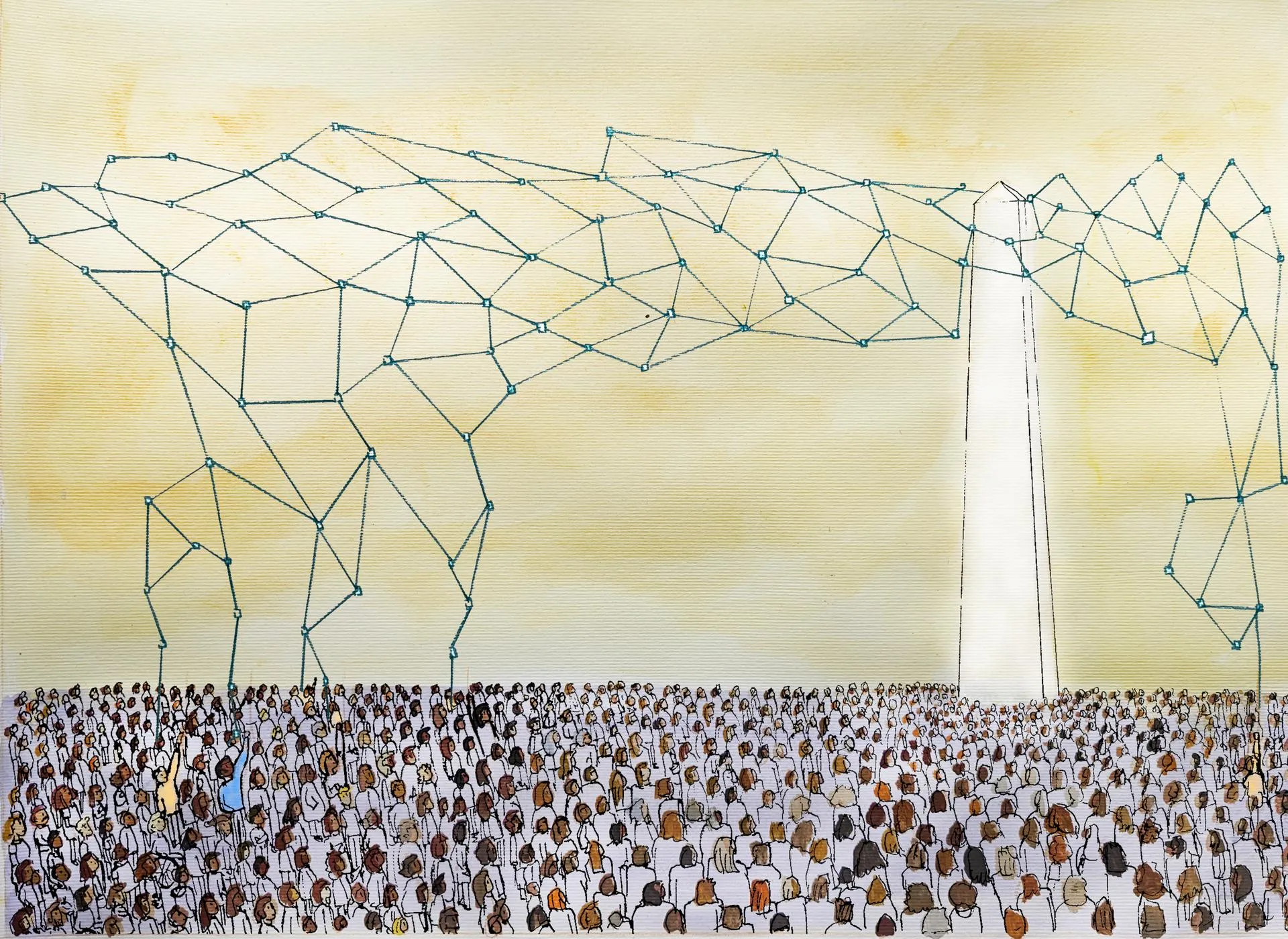
Even if AI becomes more accurate, it still forces people into homogenized categories, which contradicts democratic values of individuality and freedom. The desire to surveil crosses party lines—it’s about power, not politics. AI is smoothing out people’s individuality and instead placing each person into a group that’s deemed to behave a certain way.
Lastly, the author compares AI to nuclear energy: potentially useful but dangerous, requiring strict controls to protect democracy. Without such safeguards, AI and surveillance will continue to undermine freedom and privacy.